🐉 Korean Traditional Game Series 55
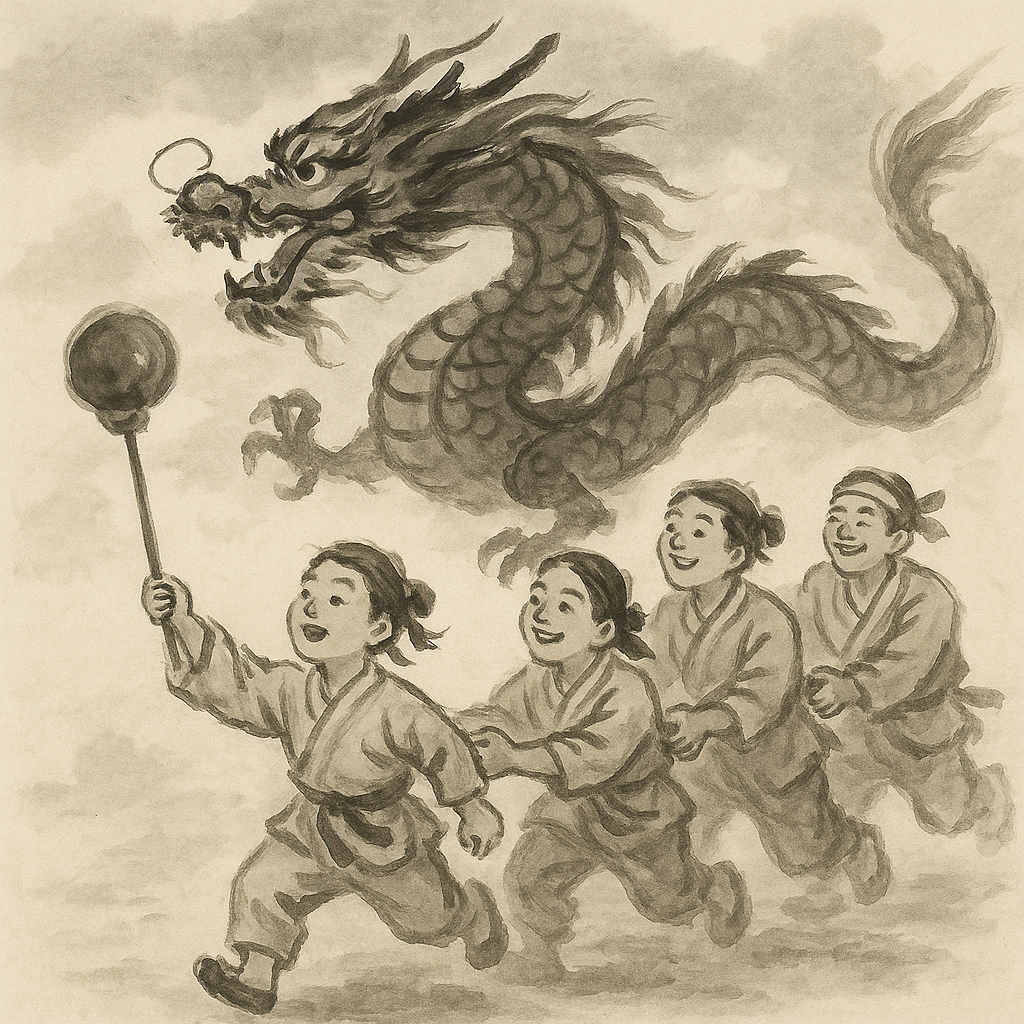
Yong Nori
(용놀이 · Korean Dragon Play)
🕰️ 1. Introduction
Yong Nori (용놀이), or Dragon Play, is a vibrant Korean traditional performance game inspired by the dragon (yong), a sacred creature believed to control rain, water, and prosperity.
In agrarian Korea, dragons symbolized hope for good harvests and protection from droughts and disasters.
Performed during village festivals, New Year celebrations, or rain-invoking rituals, Yong Nori combined play, dance, and prayer.
Though spectacular in appearance, its heart lay in community unity — many people moving as one to bring blessings to all.
🪄 2. How to Play and Perform
- Creating the dragon:
Villagers make a long dragon figure using cloth, straw, paper, or bamboo frames.
The head is often large and expressive, while the body stretches long enough for many players to hold from underneath. - Assigning roles:
One player controls the dragon’s head, while others support the body and tail.
Each person’s movement affects the whole, teaching coordination and teamwork. - The dragon dance:
Accompanied by drums (buk), gongs (kkwaenggwari), and shouts, the dragon twists, rises, and coils.
It weaves through the village, bows to elders, and circles fields or wells to invite rain and good fortune. - The finale:
The dragon often “ascends” by lifting its head high, symbolizing the arrival of rain, abundance, and a hopeful future.
👀 3. Example from Life
On a humid summer afternoon, villagers gather in the open field.
The long dragon sways like a living river as children and adults move beneath its body.
Drums thunder, feet pound the earth, and cheers rise as the dragon lifts its head toward the sky.
In that moment, everyone feels connected — not just to one another, but to nature itself.
The dragon is no longer just a figure; it becomes a shared wish moving through the village.
🌏 4. Similar Traditions Around the World
- China: Dragon dances performed to welcome rain, fortune, and protection.
- India: Serpent and dragon-like ritual performances symbolizing water and fertility.
- Europe: Festival dragon figures and procession plays representing strength and renewal.
Across cultures, dragons and serpentine beings embody humanity’s deep respect for nature’s power and mystery.
💌 Closing Words
Yong Nori reminds us that strength comes from moving together.
Through one shared rhythm and many joined hands, the dragon comes alive — carrying prayers for rain, harmony, and prosperity.
It is a celebration of collective hope, rising and flowing like water through generations.
📌 Note
This is a creative cultural content from the Misojieum Story Blog (kor-telling.com).
Please do not copy without permission.
Sharing is welcome with proper source citation.
'Korean Traditional Games' 카테고리의 다른 글
| Korean Traditional Game : Sogup Nori (0) | 2026.01.12 |
|---|---|
| Korean Traditional Game : San-gaji Nori (0) | 2025.12.27 |
| Korean Traditional Game : Gama Tagi (0) | 2025.12.18 |
| Korean Traditional Game : Gwisin Nori (0) | 2025.12.08 |
| Korean Traditional Game : Gonji Nori (0) | 2025.11.30 |
| Korean Traditional Game : Haemaji Julnori (0) | 2025.11.28 |
| Korean Traditional Game : Deungbul Nori (0) | 2025.11.26 |
| Korean Traditional Game : Bangul Nori (0) | 2025.11.24 |