Korean Traditional Game Series 53 : Gama Tagi
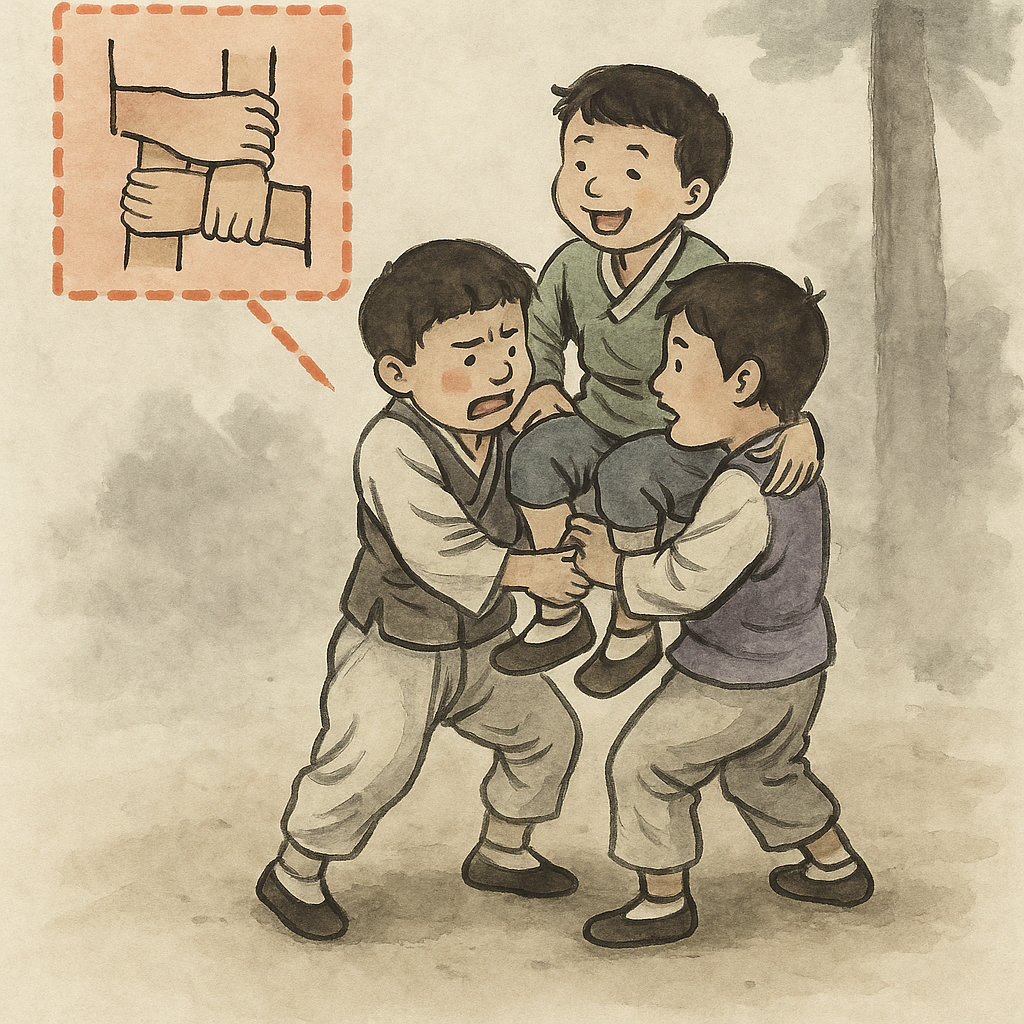
🚶♂️(가마타기 · Korean Palanquin Ride Play)
🕰️ 1. Introduction
Gama Tagi (가마타기), or Palanquin Ride Play, is a joyful Korean traditional play inspired by the old custom of riding a gama—a covered sedan chair once used by nobles, brides, and elders.
In children’s play, the grandeur of the palanquin transformed into laughter and imagination, turning everyday teamwork into a festive experience.
Rather than luxury, Gama Tagi emphasized cooperation and balance. Children learned how shared effort could lift one person safely—an early lesson in community spirit and mutual care deeply rooted in Korean culture.
🪄 2. How to Play
- Preparing the “gama”:
Children use a sturdy chair, a small wooden box, or simply interlocked arms. Two long sticks (or poles) may be placed on either side to mimic the palanquin handles. - Choosing roles:
One child becomes the “passenger” (often a pretend noble or bride), while others act as carriers. Roles rotate so everyone gets a turn. - The ride:
The carriers lift carefully and walk in rhythm, chanting playful lines like
“가마 나간다—비켜라!” (“The palanquin is coming—make way!”).
Gentle bouncing adds fun, but safety and balance are always emphasized. - Celebration:
The ride ends with bows and applause. Sometimes, children add music, clapping, or short skits to complete the scene.
👀 3. Example from Life
On a sunny schoolyard afternoon, children gather around a chair placed between two sticks.
“Your Highness, please ride!” they tease, as one child sits proudly, pretending to wave like royalty.
The carriers step together—one, two—laughing as they keep the pace steady.
When the “gama” reaches its destination, everyone cheers. Roles switch, and the game begins again—each round building trust, rhythm, and shared joy.
🌏 4. Similar Traditions Around the World
- China: Sedan chair role-play inspired by wedding processions.
- India: Festival games mimicking palanquin processions for deities.
- Europe: Chair-lift games during village fairs emphasizing teamwork and balance.
Across cultures, carrying games celebrate unity—showing how many hands working together can make any journey joyful.
💌 Closing Words
Gama Tagi turns history into play and effort into laughter.
It reminds us that true honor lies not in being carried, but in carrying one another with care.
Through this playful tradition, Korean children learned balance, trust, and the happiness of moving forward together.
📌 Note
This is a creative cultural content from the Misojieum Story Blog (kor-telling.com).
Please do not copy without permission.
Sharing is welcome with proper source citation.
'Korean Traditional Games' 카테고리의 다른 글
| Korean Traditional Game : Sogup Nori (0) | 2026.01.12 |
|---|---|
| Korean Traditional Game : Korean Dragon Play (0) | 2026.01.04 |
| Korean Traditional Game : San-gaji Nori (0) | 2025.12.27 |
| Korean Traditional Game : Gwisin Nori (0) | 2025.12.08 |
| Korean Traditional Game : Gonji Nori (0) | 2025.11.30 |
| Korean Traditional Game : Haemaji Julnori (0) | 2025.11.28 |
| Korean Traditional Game : Deungbul Nori (0) | 2025.11.26 |
| Korean Traditional Game : Bangul Nori (0) | 2025.11.24 |