Stories of Korea’s National Treasures 52
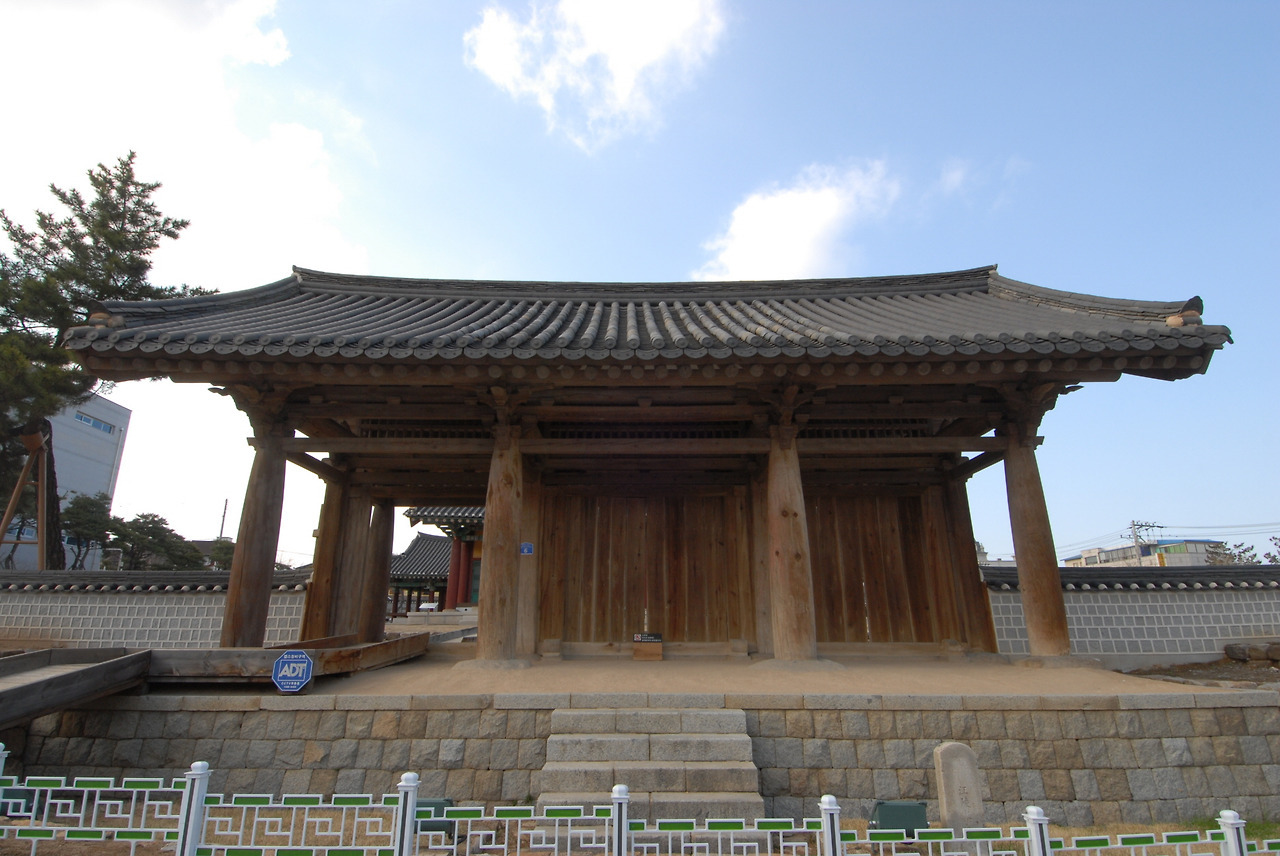
Photo Credit: Cultural Heritage Administration of Korea
Sammun (Three-arched Gate) of Imyeonggwan
(Gangneung, Gangwon-do)
🏯 1. A Gate of Royal Dignity
In the coastal city of Gangneung, the Sammun (Three-arched Gate) of Imyeonggwan stands as a rare surviving example of a Joseon Dynasty ceremonial structure.
It once served as the grand entrance to the Imyeonggwan Guest Pavilion, where kings and royal envoys were received when traveling to the eastern provinces.
Built in the early Joseon period (15th century), this gate symbolized the authority of the state and the solemn hospitality extended to the monarch.
Its three portals — central, left, and right — were not merely architectural features but expressions of hierarchy and order, reflecting the Confucian principles that shaped Korean society.
To pass through the middle gate was a privilege reserved for the king himself — a ritual of dignity preserved in wood.
🪨 2. Structure and Architectural Harmony
The Sammun is a wooden gate pavilion consisting of three parallel arched entrances, each framed by robust wooden columns set on stone foundations.
Its central gate (Jungmun) is slightly higher and wider than the two flanking gates, creating a subtle visual hierarchy.
The roof, covered with traditional tiles, features elegantly curved eaves and intricately carved bracket sets (gongpo), balancing strength and grace.
Every beam and joint fits together with traditional joinery techniques, requiring no nails — a hallmark of Korean craftsmanship.
The simple exterior belies a profound architectural order: symmetry, restraint, and proportion converge to form a gate of both function and philosophy.
🌄 3. A Symbol of Authority and Harmony
In the Confucian world of the Joseon Dynasty, gates were powerful symbols of moral and political structure.
The Sammun of Imyeonggwan embodied the principle of harmony between heaven, earth, and humanity, expressed through its three passages.
The central gate represented the ruler’s virtue, while the side gates symbolized loyal ministers and the people — a spatial metaphor for cooperation within moral order.
When royal processions passed through this gate, the sound of drums and gongs would fill the air, and the citizens of Gangneung would bow in respect.
Even today, the gate retains that quiet majesty — a wooden echo of an age when reverence and discipline guided public life.
🌿 4. Preservation and Legacy
The Sammun of Imyeonggwan is one of the few remaining official gates from early Joseon architecture, offering invaluable insight into Korea’s civic and ceremonial design traditions.
Designated National Treasure No. 52, it stands as a rare link between Korea’s royal past and its living heritage.
Despite centuries of storms and social change, its pillars remain upright, its roof steady — a testament to the enduring craftsmanship and cultural identity of the Korean people.
In its weathered timbers lies the quiet voice of history:
that true power is not in grandeur, but in grace maintained through time.
💬 5. A Warm Reflection
“This gate has no throne, yet it speaks of kings.
Its strength lies not in gold or stone,
but in the balance it keeps —
between power and humility,
between the world within and the world beyond.”
📌 Notice
The National Treasure number indicates the order of designation, not a ranking of value.
For more information, please visit the 👉National Heritage Portal